

An Overview of Infrared Heaters: Not all infrared heat emission technology is the same.
Traditionally, infrared saunas have employed ceramic rod technology, as they were the first type of sauna heaters available. They emit infrared rays but they become very hot, causing safety concerns. Internal temperatures of the sauna get very high near the heaters but get cooler the further you get from the heaters.
This results in uneven temperatures in the cabin of the sauna, often causing an uncomfortable experience. In addition, ceramic heaters are not very efficient, with an IR emissivity level of about 85%, which is part of the reason they are no longer considered the technology of choice for IR saunas.
By contrast, clinically-backed SoloCarbon heaters used in our saunas emit heat at a lower, much more constant temperature via larger panels. This produces a more even distribution of comfortable heat throughout the sauna. Heat-emitting panels in all of our saunas are strategically placed, surrounding you with efficient therapeutic infrared heat.
Infrared rays at a more effective range are emitted, which leads to more efficient detoxification, reduction of blood pressure, weight loss, and pain relief. Your skin’s appearance will also improve through regular use of your IR sauna.
Whereas, most carbon blend heaters have an emissivity level of about 90%, Select Series heaters have an emissivity level of about 93%. Better yet, heaters featured in the mPulse Series have been confirmed by an independent researcher to have a 99% emissivity level.
SoloCarbon® Custom Spectrum heater technology used in our saunas is unique in its capability of producing the full range of infrared wavelengths. All three levels of IR heat– far, mid-range, and near – are emitted by these heaters. mPulse saunas are especially adept at providing you with the health benefits most needed.
Things to Consider When Choosing an Infrared Sauna
1. Technical Specifications – The surface area of the heaters, their IR emissivity, and power are important considerations when choosing a sauna.
2. Infrared Customizability – For maximum comfort and effectiveness, it is important to be able to control the breadth, duration, and output levels of the infrared wavelengths. This will enable you to make precise adjustments in order to target various health benefits.
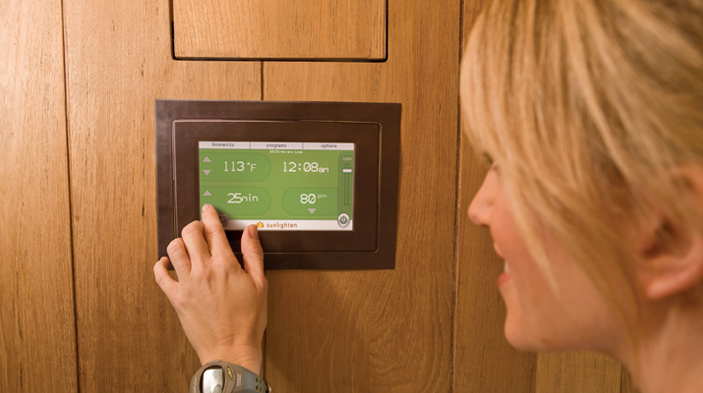
3. Heater Programs – Are there one-touch settings available, and is it easy to personalize a session? This is a measure of how likely it is for you to be able to tap into the heater’s full potential.
4. Clinical Proof of Efficacy – Is there research to back the claims made by the sauna’s manufacturer regarding efficacy of health benefits, safety, etc.? Does the sales material or representative cite research studies and are the heater settings based on those studies? It’s essential to be able to verify the claimed benefits. Without 3rd party verification or correct sauna and heater design, you will not achieve claimed health benefits.
Unlike other heating technologies on the market today, only SoloCarbon Custom Spectrum heaters found in our saunas offer all four of these elements needed to achieve targeted, precise health results.
Clinical Backing
Various wavelengths of the infrared spectrum are more effective than others at targeting different health benefits. To this end, SoloCarbon Custom Spectrum’s proprietary blends of wavelengths were developed based on over 56 research studies to deliver the most effective health results. (Sample clinical studies are listed below.)
No matter your desired health goals, if they can be achieved with infrared, mPulse’s SoloCarbon Custom Spectrum can deliver them.